Use the matter stage as operational context
Trigger the appropriate work from where the probate matter is, its subtype, and the conditions the firm has configured.

Probate Workflow Automation
PallmLaw turns the firm's approved probate process into visible, stage-based automation across critical dates, tasks, ownership, handoffs, waits, reminders, and firm-controlled client communication. Attorneys and staff retain responsibility for legal judgment.
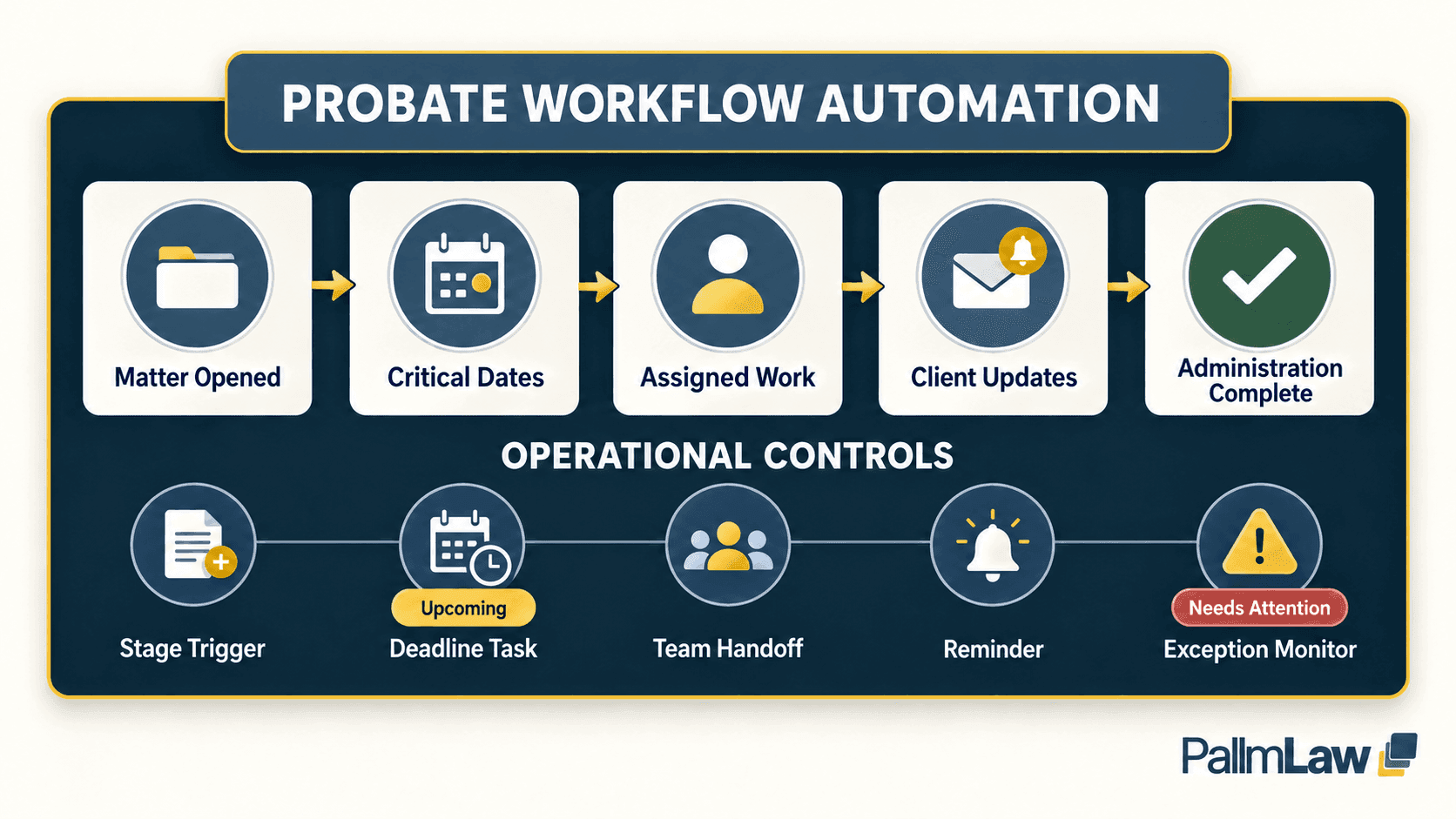
Probate Automation
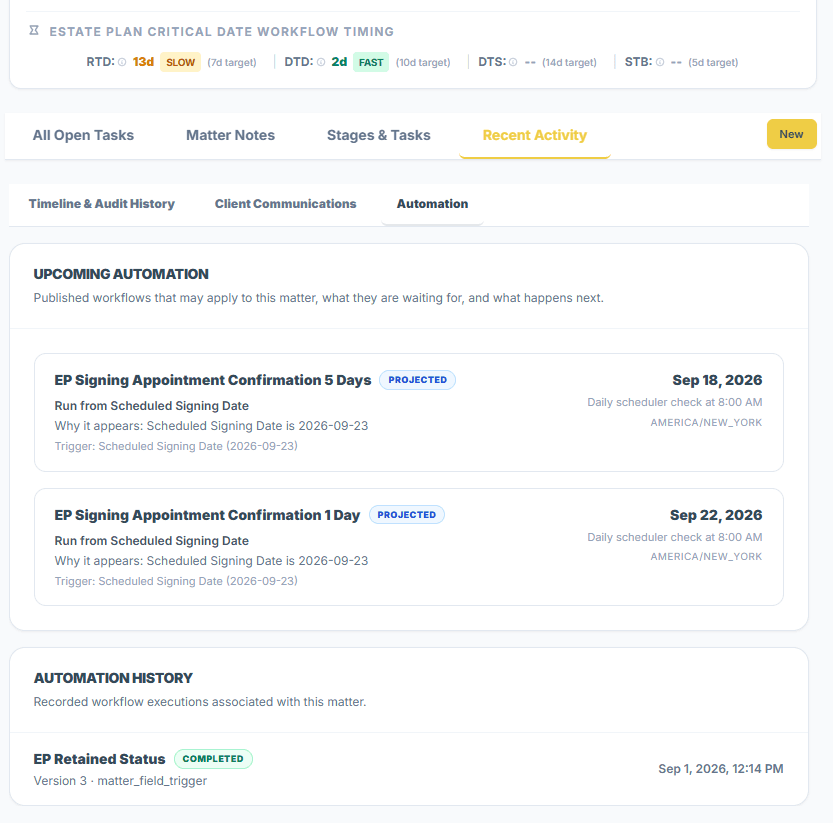
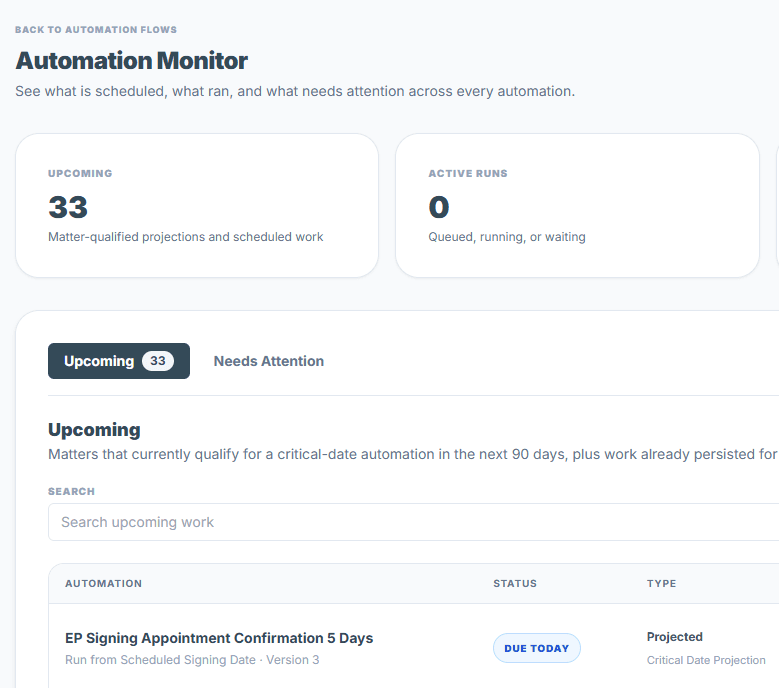
PallmLaw connects automation to structured matter context rather than treating every reminder or task as an isolated rule. Upcoming activity, run history, and attention-needed work remain visible to the people responsible for delivery.
Controlled Automation
Trigger the appropriate work from where the probate matter is, its subtype, and the conditions the firm has configured.
Use critical dates and offsets to create visible, owned work rather than leaving deadline follow-up in individual calendars.
Assign tasks, wait for the correct point in the process, and use approved templates for appropriate client updates.
Inspect upcoming automation, run history, failures, and attention states instead of treating automation as an invisible background process.
Questions Before Implementation
No. PallmLaw automates configured operational work. Attorneys and staff remain responsible for legal analysis, decisions, filings, and professional judgment.
Yes. PallmLaw supports configurable practice-area and subtype workflows so stages, critical dates, task templates, and rules can follow different probate paths.
No. PallmLaw controls workflow and matter operations. It works alongside the firm's drafting, document-generation, accounting, and practice-management systems.